Identity Threat Protection
Product Enablement
Overview
Objectives
- Review key concepts
- Increase familiarity with the product
- Identify how ITP provides value for customers
- Differentiate Okta’s ITP vs competing products
- Wrap up in 15m
Glossary: Fundamentals
Identity
The unique digital profile of an employee, device, or app trying to log in and access company data.
Identity Signals
Real-time contextual clues like a user’s location, typing patterns, or IP address that are analyzed during a login attempt.
Pattern Detection
Using AI to instantly spot unusual activity by comparing a user’s current login signals against their normal everyday habits.
Device Health
Continuous, automatic verification that a laptop or phone is fully updated and secure before letting it connect to the network.
Multi-factor Authentication (MFA)
A multi-step login process that often requires tapping a prompt on a secure authenticator app.
Token Theft
A modern cyberattack where hackers steal the digital “VIP pass” left in a user’s browser, allowing them to bypass MFA entirely.
Sessions: Hijacking & Termination
When a hacker uses a stolen digital pass (🍪) to impersonate a live user, requiring a global “kill switch” to instantly force a logout across all apps.
Workflows
Digital playbooks that instantly trigger automated safety actions the moment a threat is spotted.
What’s in it for Me?
Pipeline Generation
Use ITP to knock on a CISO’s door and challenge their post-login security blind spots. Assuming they have legacy IAM tech, probe their real-time capabilities across a complex ecosystem.
Territory Planning
ITP centers your territory vision around an urgent threat (session hijacking), giving you a high-intent narrative to open enterprise accounts quickly.
Attaching ITP to your core deals is how you land sticky deals and nail quotas quickly.
Value-Based Positioning
ITP lets you sell high-level business value to execs for a big-picture narrative: stopping threats cold at scale in a complex system.
Ecosystem Orchestration
Building pipeline is a team sport and ITP gives your front line an aggressive, disruptive hook for outbound prospecting and gives your channel partners a massive financial incentive to help you uncover hidden opportunities.
Product Overview
The Problem
User identity is a leading attack target. You can tell customers that 80% of data breaches are associated with attacks on identity.
Why break through the wall if you can walk through the front door?
Product Overview
The Intervention
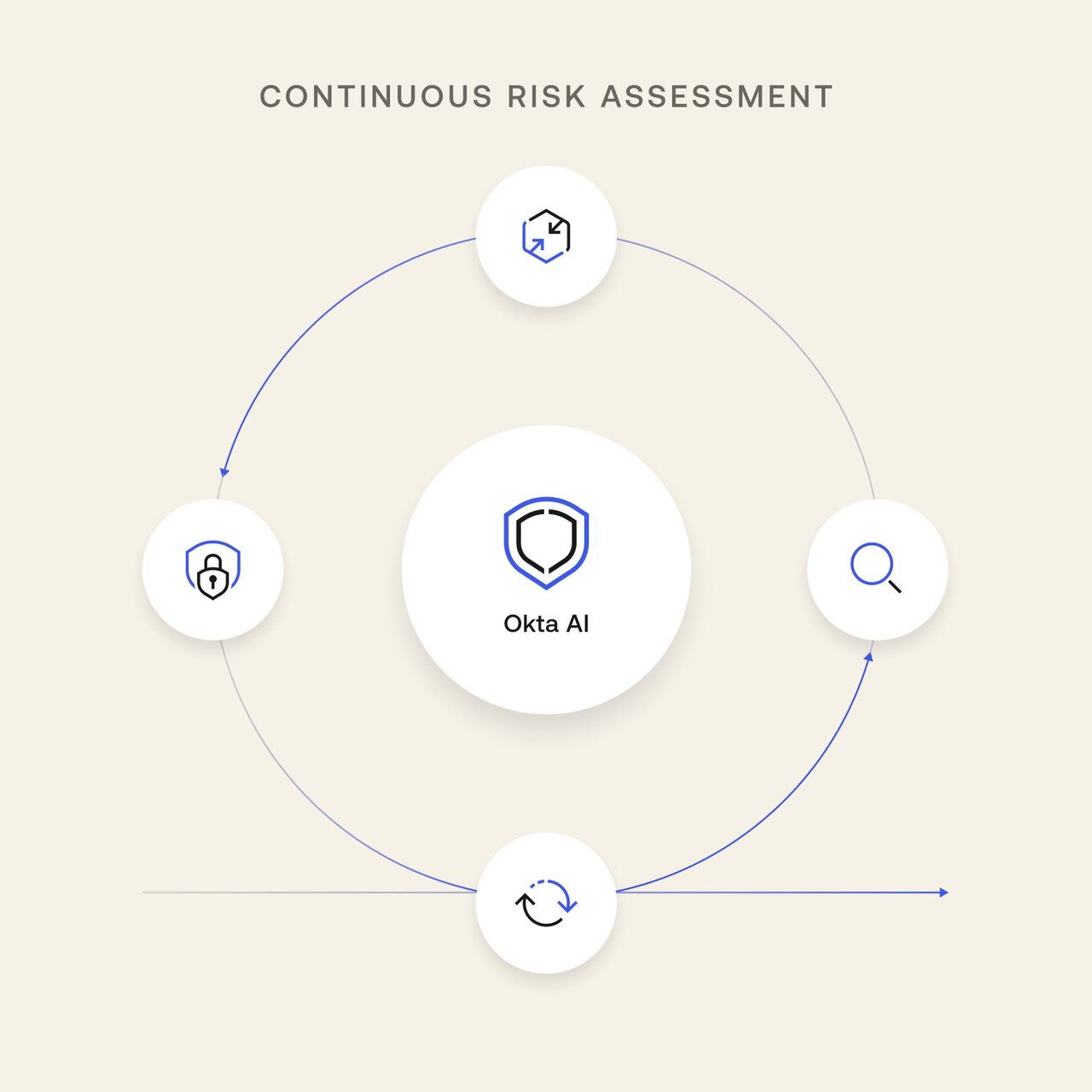
- 🗘 ITP continuously monitors user sessions across customer tech stacks
- 🧠 AI-driven processes look for anomalous patterns in user behavior and device activity
- ❌ Threats are stopped in real time across complex tech ecosystems
Product Overview
Advanced Capabilities
- Extended detection and response to gather clues from the entire tech ecosystem
- An advanced cloud security layer between employees and remote systems
- Real-time device and hardware monitoring and security
Competition
![]()
Microsoft Entra ID |
Ecosystem-Centric: Real-time termination works well, but is heavily restricted to native M365 and Azure environments. |
The Vendor-Neutral Identity Hub: Okta ITP evaluates and orchestrates risk across all major cloud apps simultaneously. |
Cross-SaaS Remediation: Okta severs access across M365, Salesforce, and AWS instantly via the Shared Signals Framework (SSF). Entra struggles to kill non-Microsoft sessions immediately. |
![]()
CrowdStrike Falcon |
Endpoint-Centric: Focuses deeply on machine-level lateral movement and credential dumping. Relies heavily on an installed agent. |
True Identity Context: Okta doesn’t care if an endpoint is managed or unmanaged. It secures the identity boundary at the app layer. |
Unmanaged Device Security: Falcon is blinded if an attacker steals a token from a personal BYOD laptop. Okta catches token theft via behavior and network context. |
![]()
PingOne Identity |
On-Prem Legacy / Heavy Orchestration: Relies on highly complex, manual workflow builders to configure basic remediation tracks. |
Out-of-the-Box Value: Okta ITP provides native, automated continuous access monitoring without multi-month engineering deployments. |
Operational Simplicity: Ping is bogged down by legacy architecture and massive engineering overhead. Okta provides a sleek, cloud-native policy engine. |
![]()
SentinelOne Singularity |
Deception & AD Focus: Built for Active Directory defense, setting up honeypot credentials, and protecting on-prem endpoints. |
Cloud-First Workforce Protection: SentinelOne protects the infrastructure; Okta protects the SaaS layer where modern business actually happens. |
SaaS Session Hijacking: Modern threats have shifted from AD domain controllers to SaaS cookie hijacking. Okta intercepts cloud-level session deviations. |
Advantages
Universal Kill Switch
When access is compromised, Okta can sever access across an entire ecosystem instantly.
Advantages
Universal Kill Switch
When access is compromised, Okta can sever access across an entire ecosystem instantly.
Neutrality is Security
Okta checks every transaction across multi-cloud environments, avoiding a single-vendor point of failure.
Advantages
Universal Kill Switch
When access is compromised, Okta can sever access across an entire ecosystem instantly.
Neutrality is Security
Okta checks every transaction across multi-cloud environments, avoiding a single-vendor point of failure.
Session Security
Okta ITP protects the user session itself, making it highly effective against session hijacking and token theft.
Key Takeaways
Okta’s ITP is all about continuous full-ecosystem awareness, AI-driven automatic detection, and the universal lockout capability to negate high-risk threats.
Your ICP is enterprise and strategic accounts with complex tech and high-value information at risk.
90-Day Action Plan
Phase 1: Days 1–30 | The Identity Gap Map
- Action: Audit your net-new territory to isolate companies using Microsoft, Salesforce, AWS, and Slack.
- Target: Focus on high-BYOD and contractor-heavy verticals where token theft is lethal.
90-Day Action Plan
Phase 2: Days 31–60 | The Post-Login Outbound Blitz
- Action: Arm your xDRs with this hook: MFA protects the front door after breakfast, but how do you stop a stolen session after lunch?
- Value: Pivot cold outreach away from utility features to the high-level business value of a “Universal Kill Switch.”
90-Day Action Plan
Phase 3: Days 61–90 | Run the “3-Minute Panic”
- Action: Execute a micro-simulation in live discovery to expose competitor ecosystem lock-in.
- Outcome: Refuse to land small; leverage the security conversation to scope multi-product ARR deals from day one.
Live Simulation Activity
Goal: help your prospect confront a high-stakes security blind spot in real time.
- Pair up as Sellers and Prospects
- Prospects: CISO at a large company with many contractors; happily using Microsoft Entra ID & Defender with MFA for corporate hardware login. Also using Salesforce, AWS, and Slack. Defender flags the malware, Entra revokes access.
- Sellers: Probe their capability to defend against a post-login token theft across non-MS systems and BYOD devices.
Live Simulation Activity
- Talk tracks:
Opener:
MFA protects the front door after breakfast, but how do you stop a stolen session after lunch?
Okta vs Microsoft:
If a token is hijacked, Okta isn’t hindered in a MS environment and we instantly trigger a Universal Logout everywhere simultaneously to neutralize the threat. Defender and Entra simply cannot natively kill active sessions across your other systems with that same speed.
Enablement Impact
A measurable lift in day-one seller confidence and technical fluency when positioning Okta ITP against complex, heavy-Microsoft security architectures.
Conversational Intelligence analytics tracking a targeted 2x spike in AEs actively leveraging the “BYOD token-theft scenario” and “Universal Kill Switch” hooks during live discovery.
A direct increase in net-new discovery calls secured and qualified with complex, multi-vendor enterprise accounts.
Higher ITP attach rates preventing small, single-product utility agreements and maximizing revenue performance per deal.
Upward trend in enterprise accounts using ITP as a percentage of the overall net-new client base, accelerating your territory’s long-term ARR growth.